兆Mantic arts dossier · Dreams, characters and popular divination
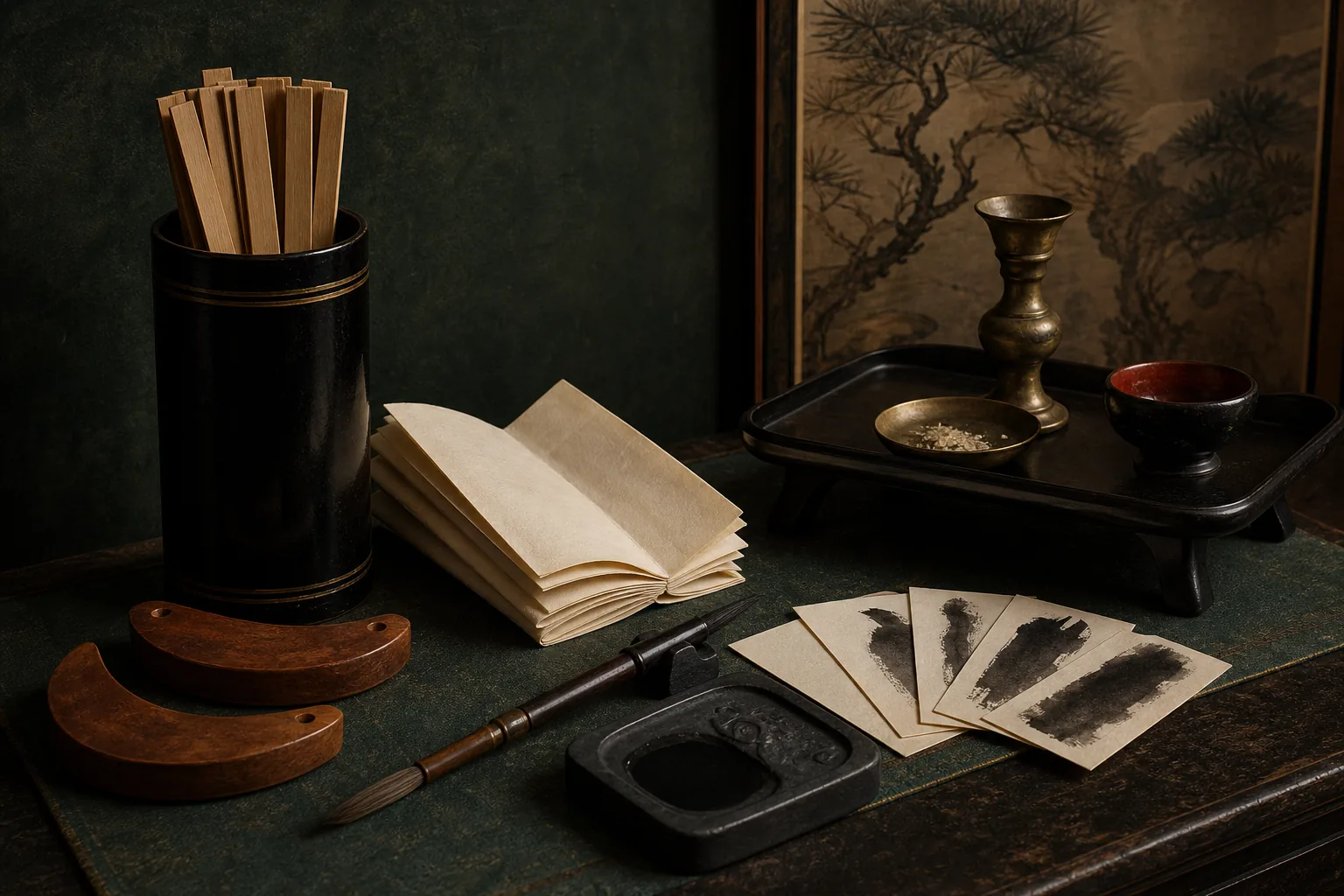
谶纬、图谶与预言文献
Chènwěi, Túchèn yǔ Yùyán Wénxiàn·Apocrypha, prophetic charts and prediction literature
Political prophecy through riddles, mandate tokens, images, scriptural correspondence and historical cycles; a major object for the study of legitimacy and textual rewriting.
- Aliases
- apocrypha, prophecy charts, mandate tokens and prophetic songs
- Formation
- Han institutionalization of chenwei; continuous later rewriting of prophetic literature
- Evidence status
01Core principles
Core principles
Translate formulas into structure: what enters, how the model is arranged, and which relations drive interpretation.
Prophetic texts use ambiguous images, character play, numbers, cycles or pictures to allow later events to be mapped back onto them. Interpretation is often retrospective and textual versions may be rewritten to improve fit.
Key concepts
- prophecy
- apocryphon
- mandate token
- textual rewriting
02Origins and historical development
Origins and historical development
Keep traditional accounts, surviving evidence and later transformations distinct.
Han chen and wei once entered canonical and political legitimacy discourse, later suffering prohibition and surviving in fragments. Works such as Tuibeitu, Maqian Ke and Shaobing Ge exist in many versions and are reinterpreted during dynastic change.
03Evidence limits and research debates
Evidence limits and research debates
Mystery belongs to the unknown—not to presenting uncertainty as fact.
These belong to prophetic literature and political culture, not a stable reproducible algorithm. Attributions to Li Chunfeng, Yuan Tiangang, Zhuge Liang or Liu Bowen are often pseudonymous.
This dossier supports historical, textual and methodological study. Internal traditional explanations are not modern empirical validation and do not replace medical, legal, financial or other professional advice.
04Core texts and materials
Core texts and materials
- 01Collected fragments of Han apocrypha
- 02Versions of Tuibeitu
- 03Maqian Ke, Shaobing Ge and related texts